

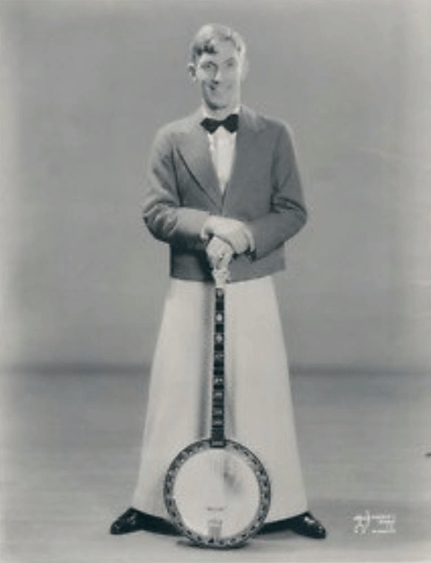
Peabody Style
If you were a person uninitiated in the way of the plectrum banjo, your path would quickly lead you to the music of Eddie Peabody. Peabody is the only name other than Scruggs to be commonly attached to the word “style” the world over, dubbing the popular playing fashion “Peabody Style.”
Of course, in reality, the chord melody style Peabody defined is today only popular relatively. While the Earl Scruggs style is ubiquitous in music in general, Peabody style was popular in pockets of time and today still has it’s legions of followers sprinkled around the globe. Much like Scruggs, Peabody’s style was basically taking the style of the day and turning it upside down, inside out, spun around at 100 mph, slathered with layers of mojo, and then tied up nicely with a little bow. While Scruggs turned country folk music to an edge-of-your-seat event, Peabody revolutionized the music of the 4 string banjo: popular, classical, and dixieland music of the early 20th century.
Let’s take the comparison one step further and say that both playing styles have created some die-hard, copycat stiffs who study the instrument but are a little block-headed about music. With Scruggs, it’s the rolls. If you can play that many notes it might sound good, but if your not a sensitive musician it might come off abrasive or annoying. Peabody style has the tremolo; lightning fast and often played with full chords sliding all around the neck. The anxiousness of this style, the loud bombastic strums whipping up an down can end up less than musical. Eddie always pulled it all off 100%; gracefully with a smile and a wink.
Instrument Designer
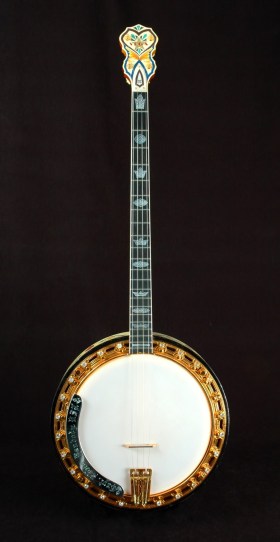
Professor Peabody designed at least 2 distinct instruments which were marketed and sold commercially. The most famous is the Vega Vox which is Eddie’s signature instrument (right). Manufactured primarily in tenor and plectrum models, the Vox design offers more volume and projection as well as a deeper tone. While most resonator banjos have the resonator reach the flange about halfway up the rim, the Vox resonator and flange go up flush with the banjo head.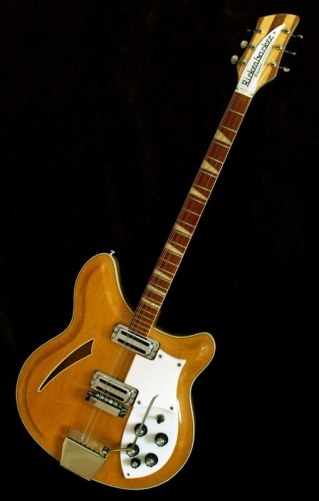
The other instrument was called the Banjoline, an electric banjo that had 6 strings (2 of them being octaves or doubles of other strings, played and tuned like a 4 string plectrum banjo.) This instrument was first made by Vega, and later models were put in production by Rickenbacker (left), and Fender. Luthier Roger Rossmeisl worked for both companies and was highly involved in the design of those instruments.
At this point banjolines are very rare and at least several thousands of dollars. Supposedly John Lennon, Bob Dylan, and Roger Mcguine all owned Rickenbacker Banjolines. Eddie played it on the entirety of his albums “Plays Smoothies,” and “Plays More Smoothies.” He often used it to perform Hawaiian music which offers a relaxing alternative to his usual rambunctiousness.
Listen to the master
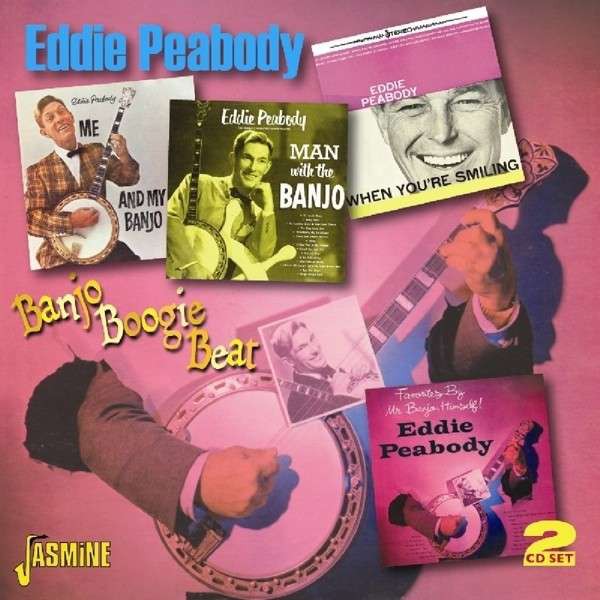
Like Earl Scruggs or Charlie Parker, you could study every single note Eddie Peabody played like an instruction manual for musical mastery. Fortunately there are many recorded documents of him playing. Look for Peabody records in the $1 bargain boxes of record store floors. Often, he is miscategorized in the bluegrass or country sections. You know… because he’s holding a banjo. You may also score some Peabody vinyl from smelly record boxes at goodwills. He has at least a dozen LP’s out there and it’s all high quality banjo music. One of my favorites is “Peabody Parade” which bounces between a variety of banjo pieces and banjoline numbers with a tight combo of bass, drums, and piano.
A sharp dresser and animated performer, Eddie was a natural attraction for the new budding industries of film and radio. Today that means there are a healthy number of videos online to experience the sights and sounds of Eddie playing a banjo, as well as many other stringed instruments. Indeed, many of excessive links on this page are awesome films of Peabody playing. Here’s one of his rendition of St. Louis Blues, which also includes his boisterous singing voice.

As a showman, Eddie undisputedly stands out. Watching him bounce around in his seat like a cartoon kiddo is almost mesmerizing.
He also served in the military, entertained the troops many times, and may have been sent on a special mission by FDR himself. He was known for imitating the sound of two banjos, three banjos, or even fifty banjos!
 The words virtuoso and genius seem to be appropriate in Eddie’s case, especially when you consider his playing style was already fully realized by the mid 1920’s. He came out of the vaudeville tradition and remained fairly relevant and successful into the 50’s and 60’s. His style lives on today, and as long as there are machines to play his music and screens to play his films you will see smiling faces listening captivated.
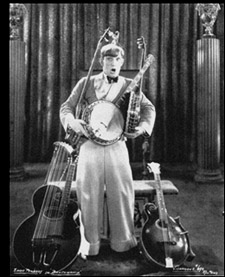
For more info on Eddie Peabody, check out EddiePeabody.com, a wonderful site operated by banjoist Sean Moyses.
 The Boogie Banjo Blog - Roots, blues, jazz, traditional, experimental folk banjoists